 Epoxy Armour Coatings · Sunshine Coast & Brisbane
Epoxy garage floors Sunshine Coast
A garage floor epoxy coating seals bare concrete against oil, tyre marks and dust, and is usually finished in one day. We grind and prep the slab, repair cracks, then lay a base coat, colour or flake, and a hard-wearing clear topcoat.
Why garages are the most common epoxy job
A bare concrete garage floor sheds dust every time you sweep it, soaks up oil and brake fluid, and marks under hot tyres. Painted floors peel within a couple of years because paint sits on top of the concrete rather than bonding into it. Epoxy is different: it is a two-part resin that soaks into the ground surface and cures into a hard, non-porous layer that becomes part of the slab.
Most of our garage jobs on the Sunshine Coast are single or double garages in homes from the 1990s onward, plus a steady run of new builds where the owner wants the floor done before moving in. A sealed garage floor also makes the space usable as a gym, workshop or rumpus room without the concrete dust getting into everything.
How we prepare the slab
Preparation is where cheap jobs fail. We diamond-grind the whole floor to remove the weak top layer of concrete, old paint and any sealer, opening the surface so the epoxy can key in. Cracks and control joints are cut out and filled with a flexible repair compound, and any spalled or drummy patches are repaired. Oil stains are degreased and, where the slab has soaked up years of oil, ground back further.
New slabs need to have cured for at least 28 days before coating. Older slabs get a moisture test: rising damp under a garage floor is the main cause of epoxy lifting, and if the slab is wet we use a moisture-tolerant primer or advise you honestly that it is not a good candidate.
Classic Flake or Stone Flake?
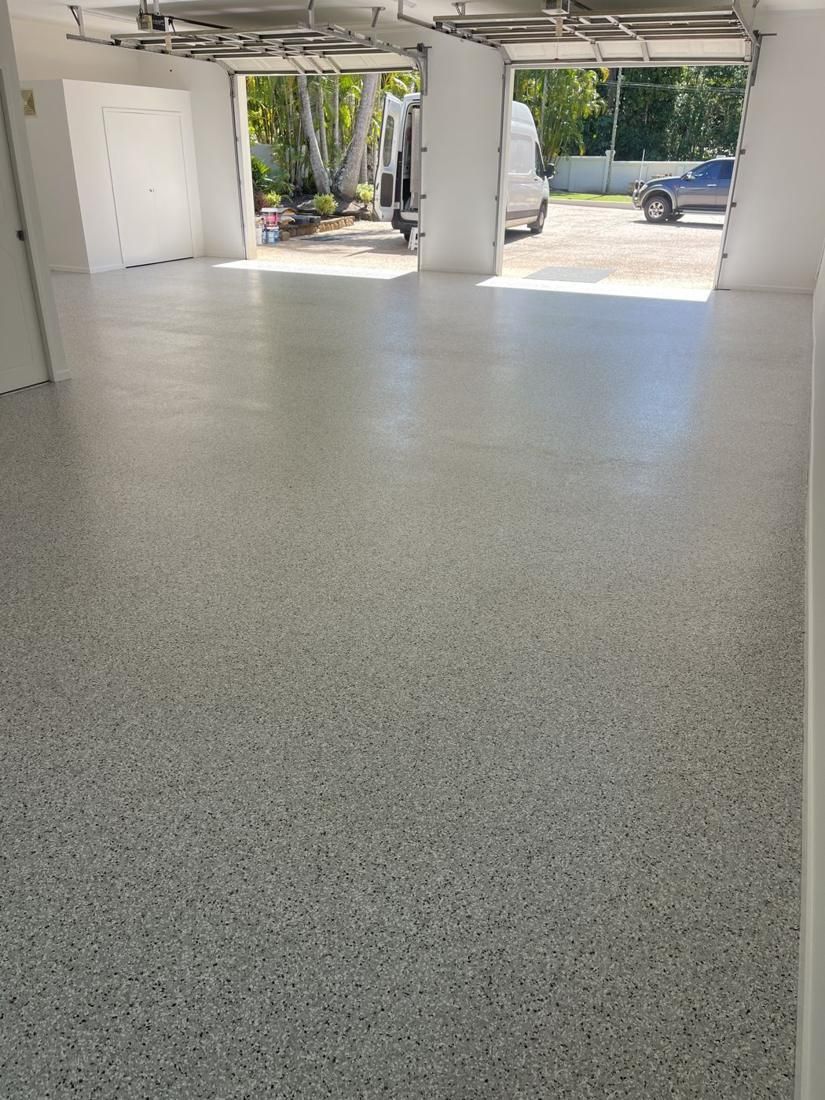
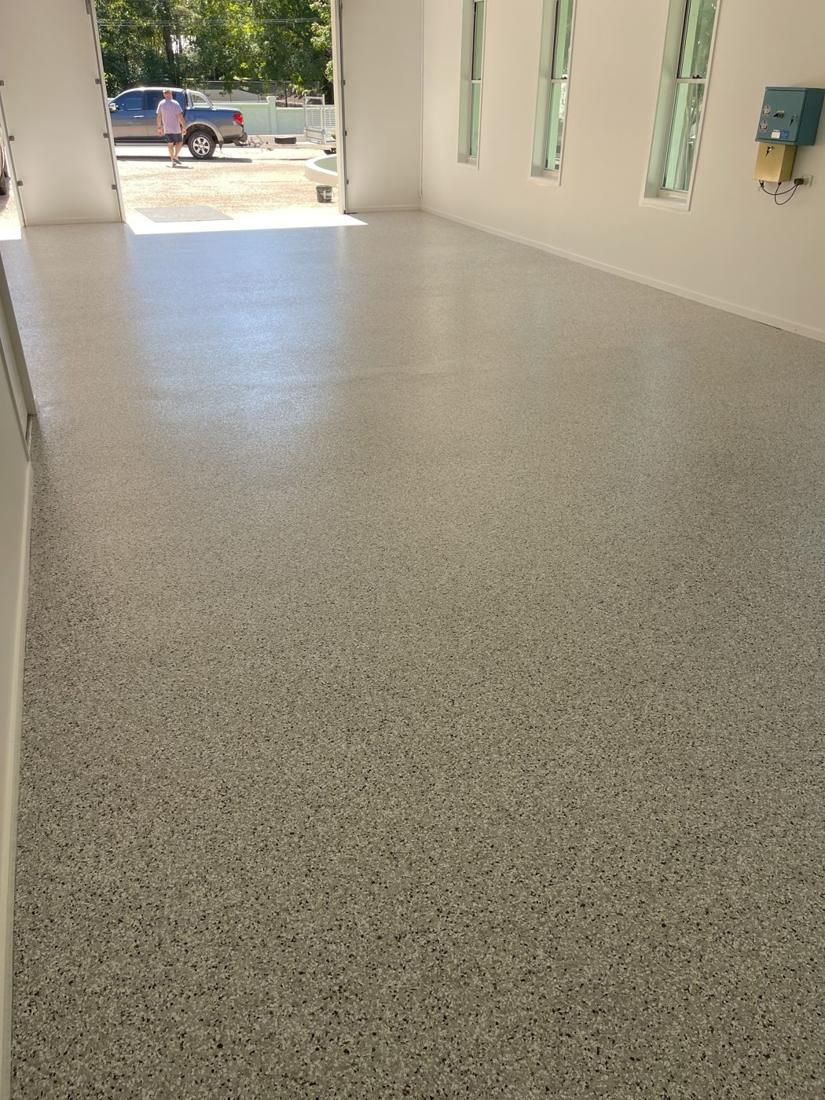
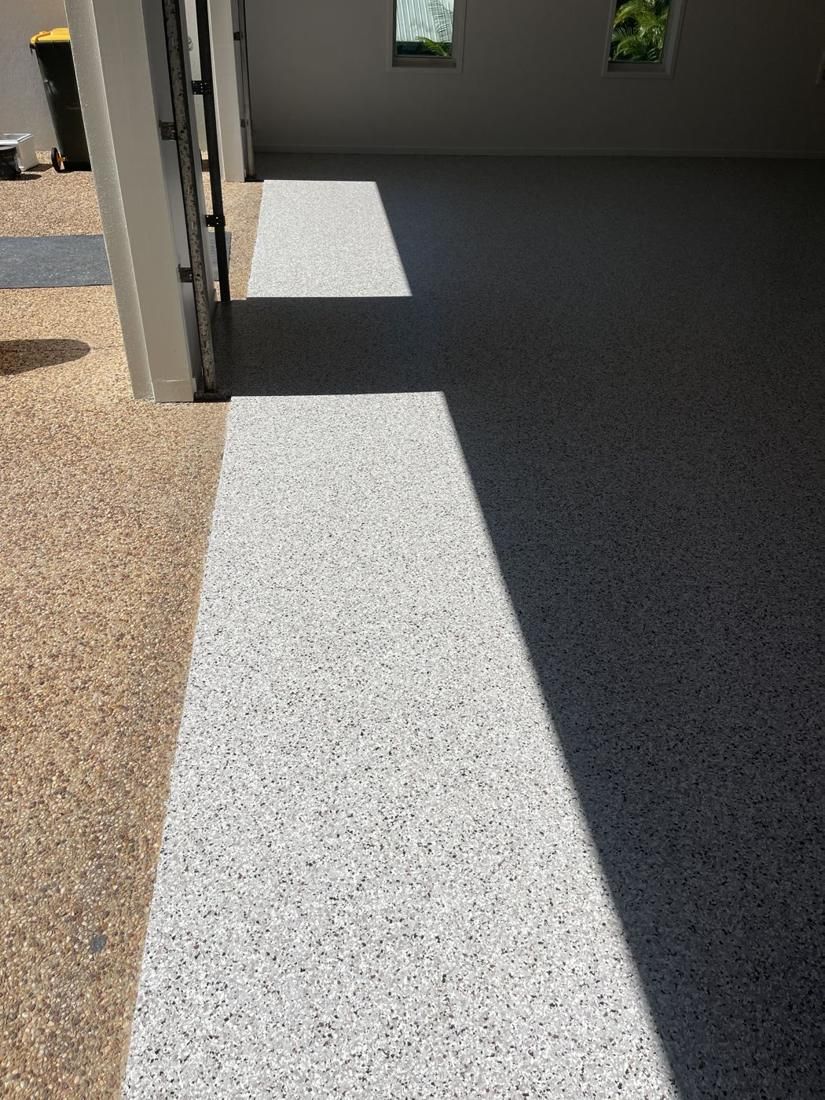
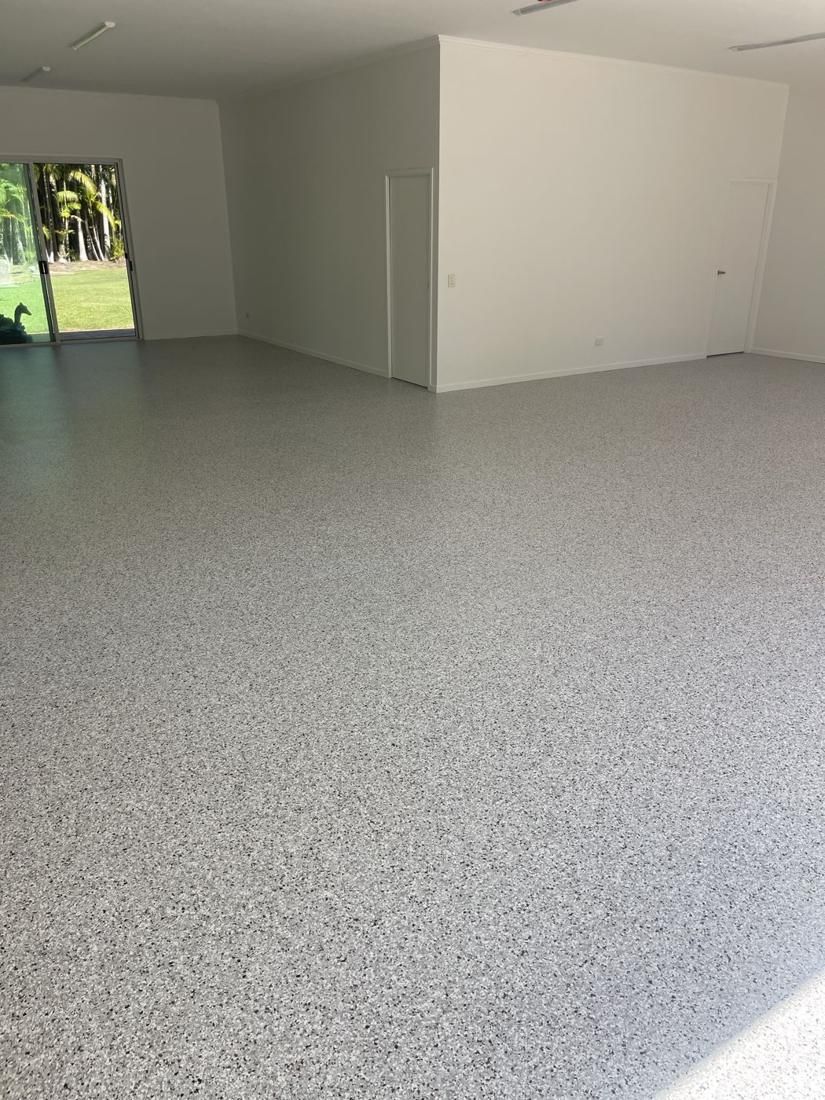
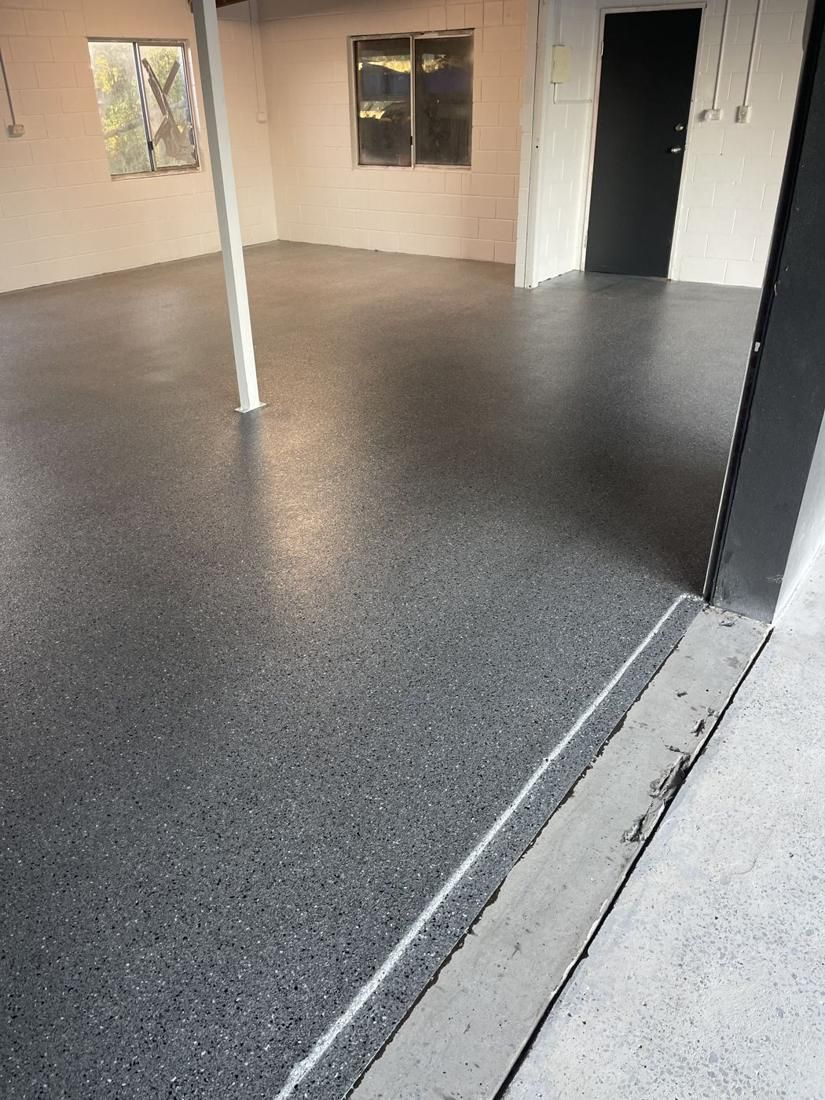
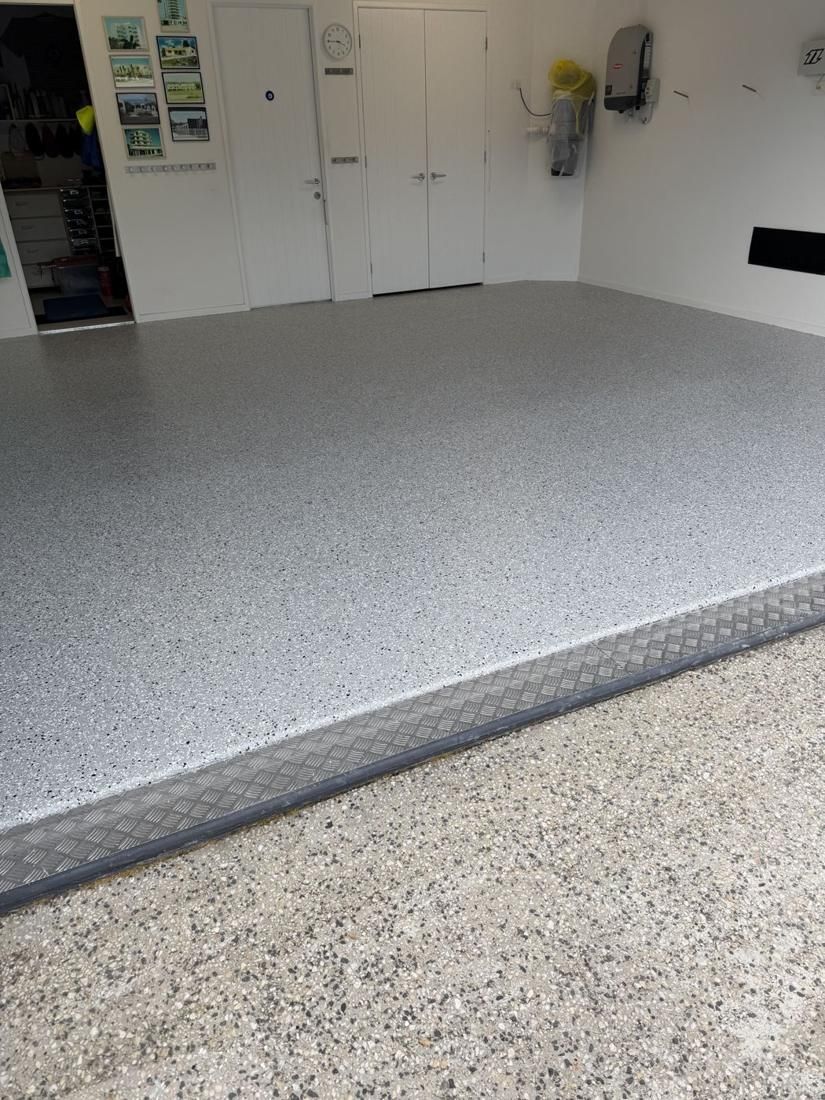
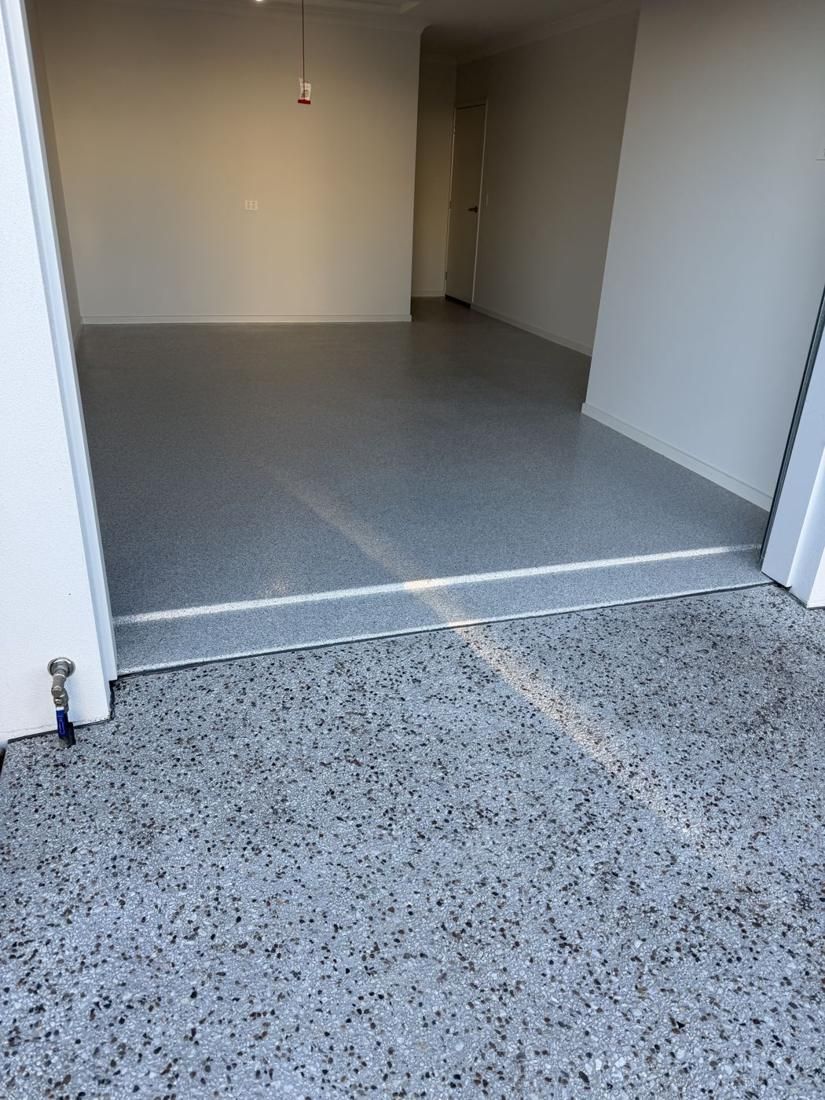
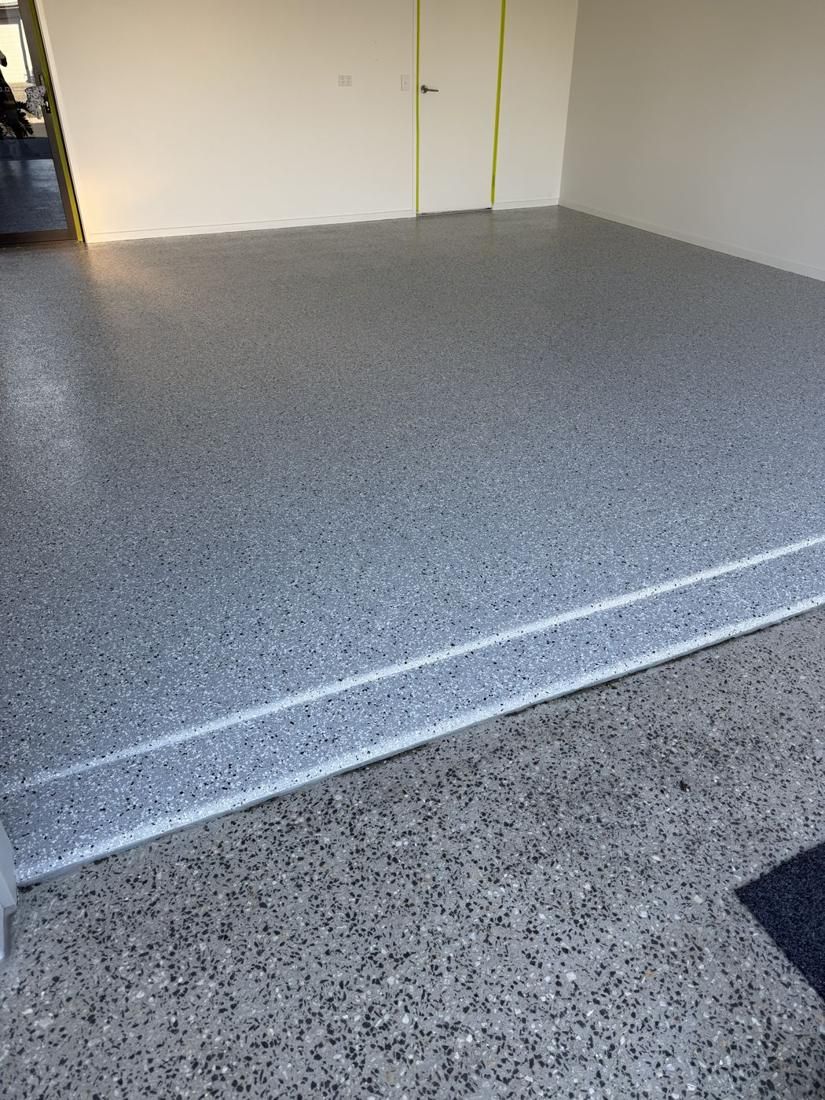
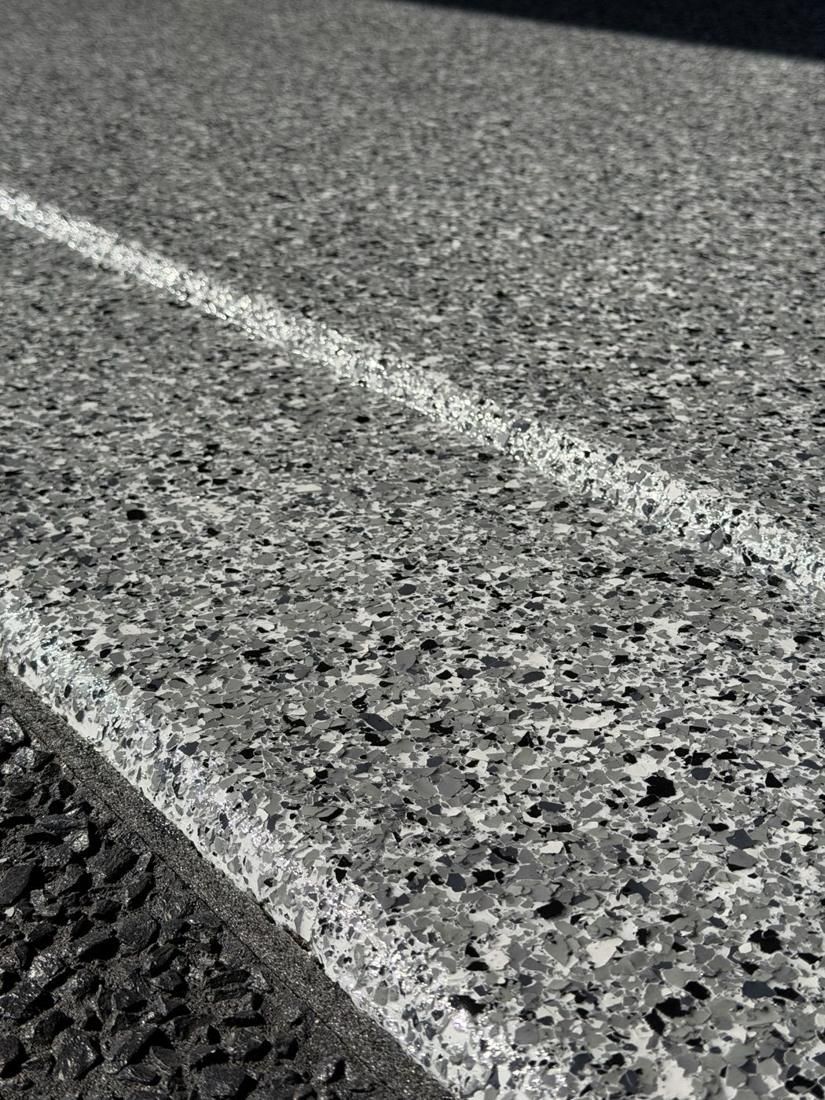
Both ranges are decorative flake broadcast into the wet base coat and sealed under a clear topcoat, so the floor hides dust, hair and tyre marks, adds a little grip underfoot and disguises minor slab imperfections. The Classic Flake Range is the proven standard blend in twelve colours: Tuxedo, California Grey, Light Grey, Preto, Pumice, Schist, Basalt Classic, Smoke, Midnight, Medium Tan, Saddle Tan and Hazelnut. Light and mid greys are the usual garage choice.
The Stone Flake Range uses next-generation hybrid-size chips, engineered for epoxy and polyaspartic systems, that settle into a seamless aggregate-style finish with the depth and texture of natural stone. Twelve finishes run from the earthy tones of Sandstone and Claystone to the sleek look of Blue Granite and Slate. We bring sample boards to the quote so you can see both ranges on your own slab.
What happens on the day
A typical double garage is one day on site. We arrive early, grind and vacuum the floor, do repairs, and lay the base coat before lunch. Flake goes on while the base coat is wet. After the base has set we scrape and vacuum the loose flake and apply the clear topcoat in the afternoon. You need the garage empty, including anything on shelves that could drop dust, and the power on.
Our same-day system is ready to walk on and use within 24 hours. We will tell you on the day exactly when to bring the car back in; in cooler winter weeks the topcoat can take a little longer to reach full hardness.
Looking after an epoxy garage floor
Sweep or hose it, and mop with warm water and a little detergent for spills. Avoid dragging steel without a mat under it. Hot tyre pick-up, which ruins painted floors, is not an issue with a properly ground and primed epoxy floor.
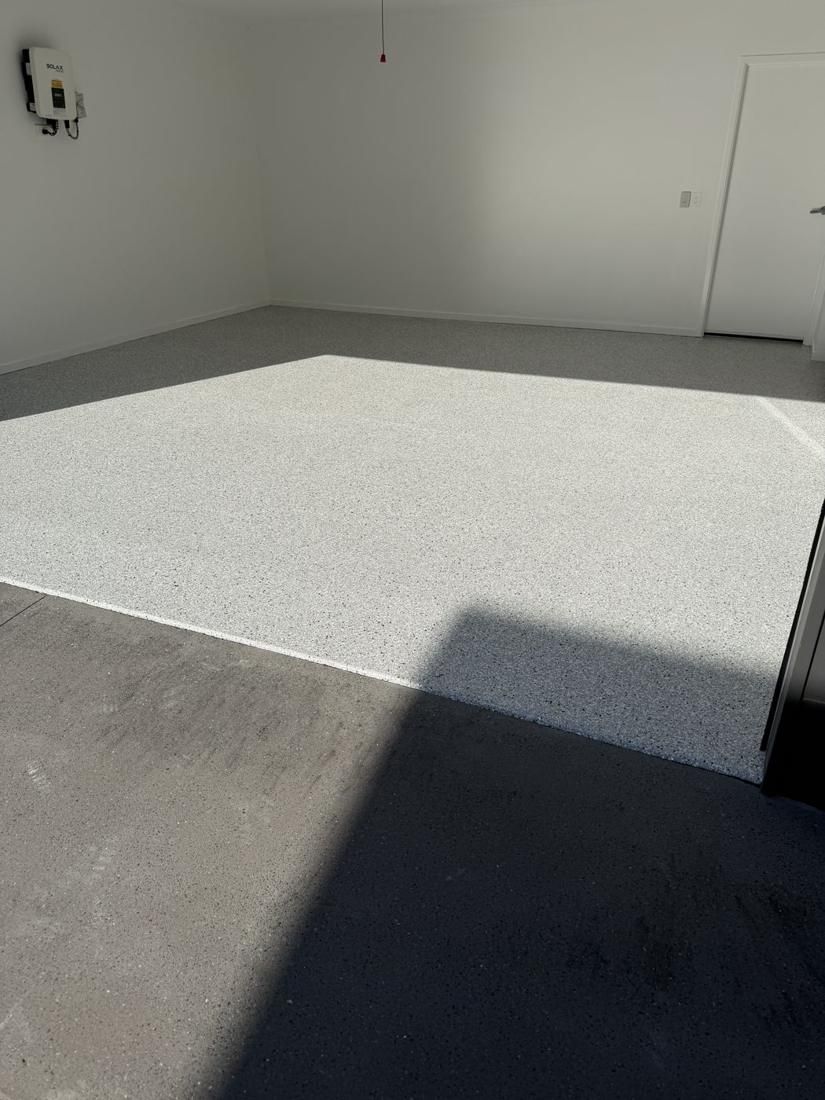
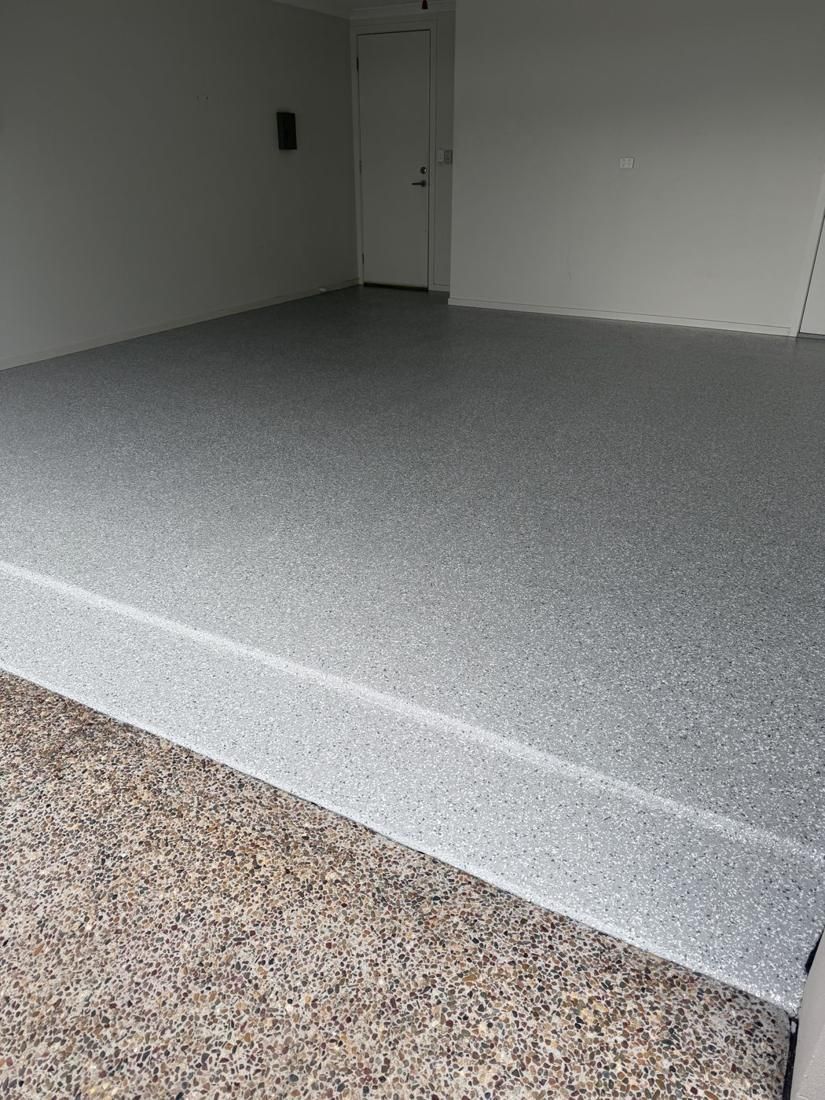
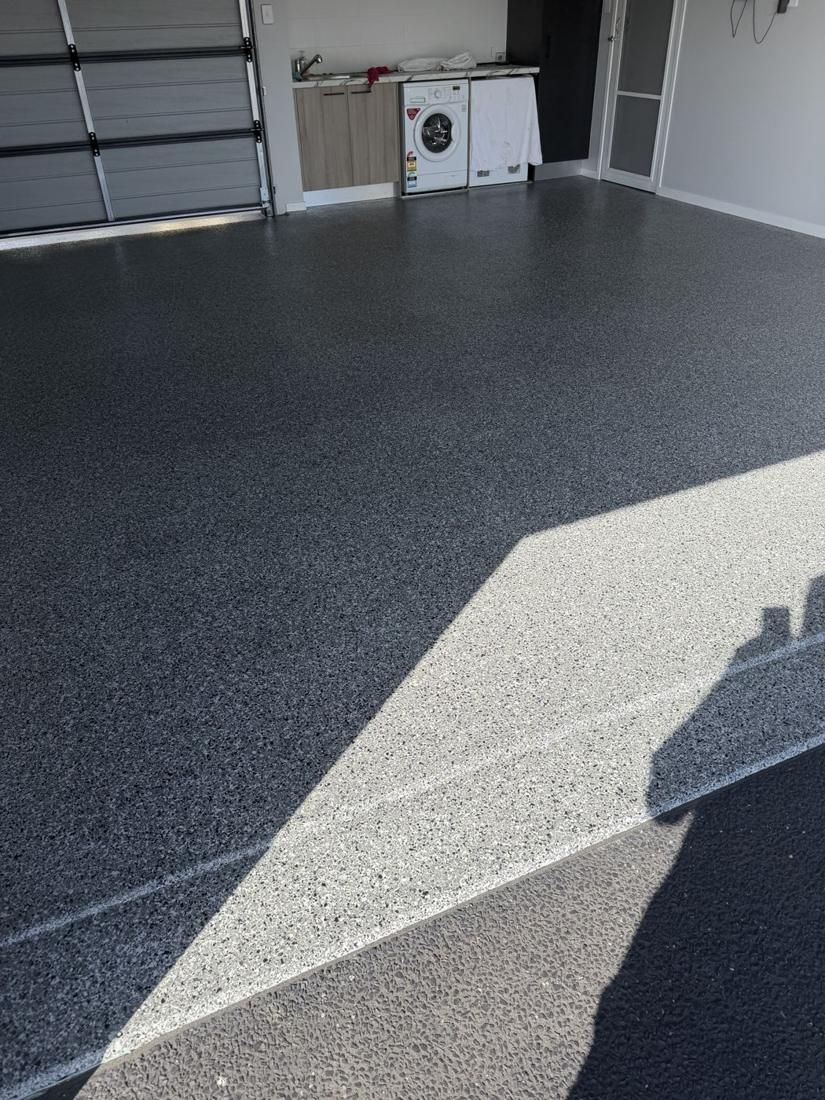
Garage floors we've done
No photos tagged to this page yet. New jobs are posted from site and appear here automatically.
Garage floor questions
How long does an epoxy garage floor take?
Can I park on epoxy the same day?
Will epoxy hide cracks and stains in my slab?
What does an epoxy garage floor cost?
Does the garage need to be empty?
Is epoxy better than garage floor paint or tiles?
Get a free measure and quote
Send a few details and we'll come back within one business day with our very best quote. Or just call — Tori answers the phone himself.